
Solar Water Pumps in Afghanistan : A Farm Buying Guide
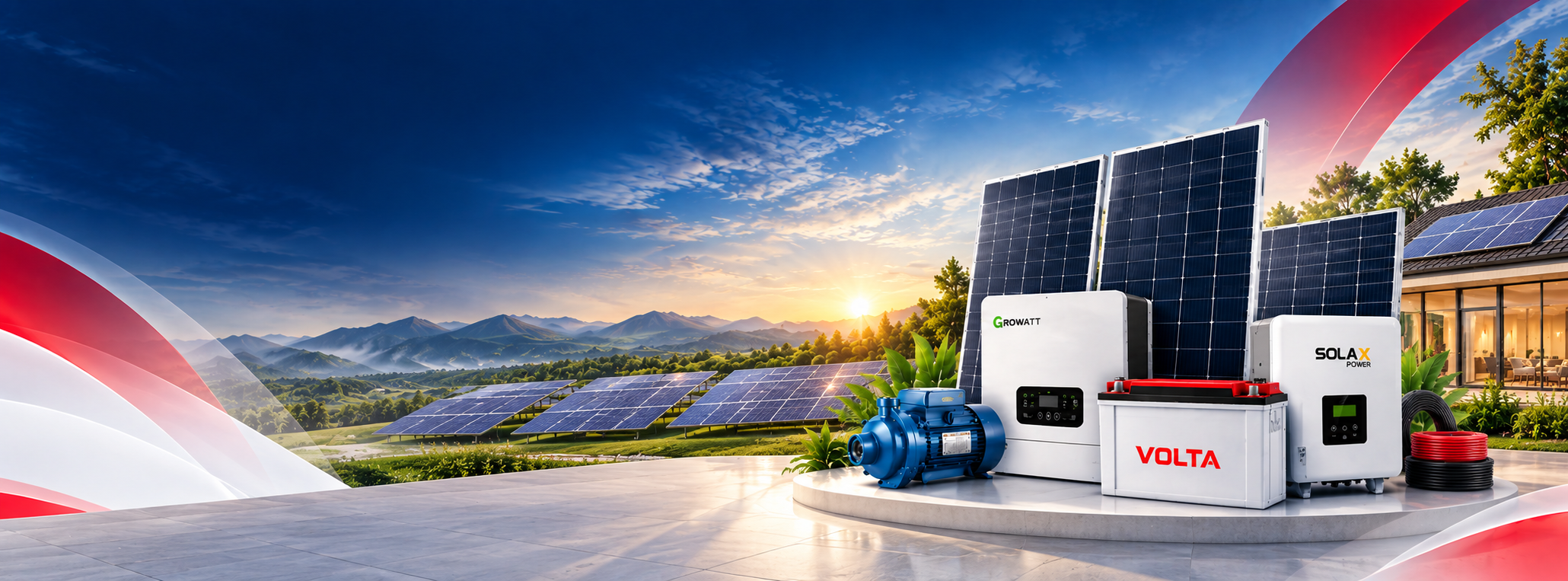
Solar Water Pumps in Afghanistan: How to Choose the Right System for Your Farm
A dependable water supply is essential for farming. For farms using diesel generators or facing unreliable electricity, solar pumping offers another way to move water from a well or other water source to fields and storage tanks.
Choosing solar water pumps in Afghanistan requires more than comparing prices or motor sizes. The right system must match your water source, daily water demand, and irrigation requirements. This guide explains what to consider before buying.
How Does a Solar Water Pump Work?
A solar water pumping system uses electricity generated by solar panels to operate a pump. A compatible controller manages power delivery to the pump.
A typical installation includes:
- Solar panels and a mounting structure
- A water pump suited to the source
- A compatible pump controller or inverter
- Pipes, cables, and electrical protection
- A water storage tank, where required
Output varies with sunlight and operating conditions. The system should therefore be designed around the water you need during the available pumping hours.
1. Calculate Your Daily Water Requirement
Start by estimating how much water your farm needs each day. This depends on your crops, cultivated area, irrigation method, soil, and season.
Also include water needed for livestock or other farm activities.
Daily volume and flow rate are different measurements. For example, delivering 30 cubic metres over six pumping hours requires an average flow of 5 cubic metres per hour. This calculation is a starting point; actual system sizing must account for changing sunlight and site conditions.
2. Check the Water Source and Pumping Depth
A pump must provide the required flow at the pressure your installation needs.
This is described by total dynamic head, which includes the vertical lift, pipe friction, and any pressure required at the outlet. Well depth alone does not tell you the total pumping requirement.
For a borehole, the pumping water level and the well’s sustainable yield are especially important. Selecting a pump that draws water faster than the well can supply it can cause operating problems.
Give your supplier accurate site measurements before requesting a pump recommendation.
3. Choose the Appropriate Pump Type
The water source helps determine which type of pump is suitable.
Submersible pumps operate underwater and are commonly used in boreholes and deeper wells.
Surface pumps remain above the water and may suit tanks, canals, or shallow sources where suction conditions allow.
Ask for the pump’s performance curve. It should show that the selected model can deliver your required flow at the calculated head. Horsepower alone is not enough to compare pumps.
4. Match the Solar Panels and Controller
The solar array, controller, and pump must work together. Panel quantity should be calculated using the pump’s requirements, controller specifications, local solar conditions, and expected system losses.
Installing extra panels without checking electrical compatibility can create problems. Correct voltage, current, cable sizing, and protection all matter.
Professional design helps ensure that the complete system suits the site.
5. Plan Water Storage and Irrigation
Some solar pumping systems pump during daylight and store water in a tank for later use. This can reduce the need for electrical battery storage when the site and irrigation schedule allow it.
The tank’s capacity and elevation must match your water demand and delivery requirements. Drip systems, sprinklers, and open channels have different flow and pressure needs.
Plan pumping and irrigation together so the water reaches your crops effectively.
What Affects Solar Water Pump Prices in Afghanistan?
A useful quotation should cover the complete installation. Costs depend on:
- Required daily water volume and flow
- Total dynamic head
- Pump and controller specifications
- Solar panel capacity
- Pipe and cable lengths
- Mounting, protection, and installation work
- Water storage requirements
Compare quotations using the same performance requirements. Ask each supplier to state the expected output, included equipment, warranty terms, and available support.
Solar Water Pump Solutions from PTN
Power Trade National Co. Ltd provides solar energy, water pumping, and irrigation solutions in Afghanistan.
When contacting PTN, share your farm location, water source, pumping water level, delivery distance, and estimated daily water requirement. These details help the team assess your project and recommend a suitable system.
Discuss your solar water pumping project with PTN.
Phone: +93 700 025-495
Email: info@ptn.com.af
Website: ptn.com.af
Frequently Asked Questions
Do solar water pumps need batteries?
Not always. Some systems operate directly from solar power during daylight and store pumped water in a tank. Battery requirements depend on when pumping is needed and how the system is designed.
Can a solar pump work on cloudy days?
Output can decrease when sunlight is weaker. Whether the pump continues operating depends on the available solar power and the equipment’s operating limits.
Can solar pumps supply drip irrigation?
Yes, provided the system delivers the flow, pressure, and water quality required by the irrigation equipment. Filtration and storage may also be needed.
Which pump size is right for my farm?
The correct size depends on daily water demand, available pumping hours, total dynamic head, and the water source’s capacity. A site assessment provides the information needed for selection.